Expert Engineering Services
Get to the Heart of Your Parts’ Design
We go beyond simply ‘molding’ parts. Through our strategic partnerships with designers, tool shops and plastic technology providers we offer our customers critical services including:
- Design through Production Capability: An integrated approach to product development and manufacturing reduces project cycle time, optimizes part and mold design, minimizes manufacturing costs, and maximizes customer profits.
- Part Design: Whether you provide us with a “sketch on a napkin” or fully detailed part prints and files, we’ll ensure that your design is optimized for strength, stability, function, cost and longevity.
- Material Testing and Analysis: Since resin characteristics are key to the part’s function, we select the proper resin early in the development stage to help ensure the success of new product introductions.
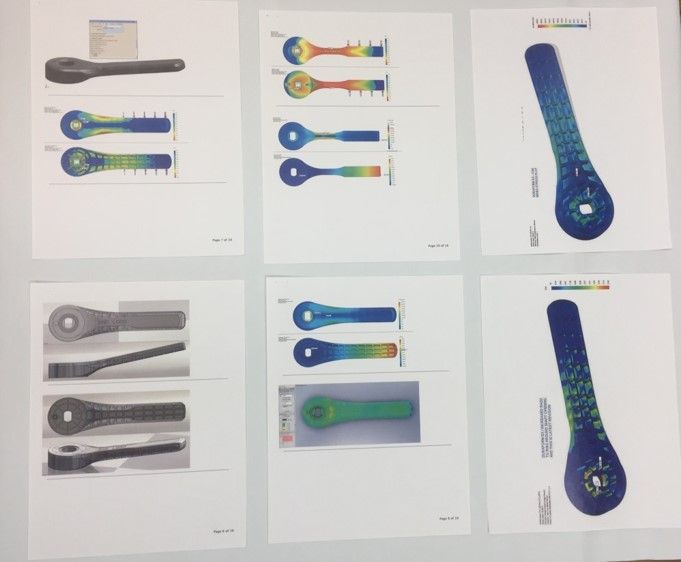
- Plastic FEA (Finite Element Analysis): Used to evaluate stress, strain and other factors to solve part performance early and ensure a part’s future performance.
- Rapid Prototyping: Lets you evaluate new design concepts before incurring major tooling costs and reduces product development time and costs.
- Mold Flow Analysis: This injection molding process simulation and analysis program evaluates gate and runner designs and locations, cooling requirements, melt temperature and other processing variables, enabling the toolmaker to optimizes the tool design for manufacturability and part performance.
- Mold Design and Fabrication:
Our strategic alliances with local tool and die shops allow us to provide prototype and production mold fabrication services.
Request a Free Consultation
Learn With EnTech
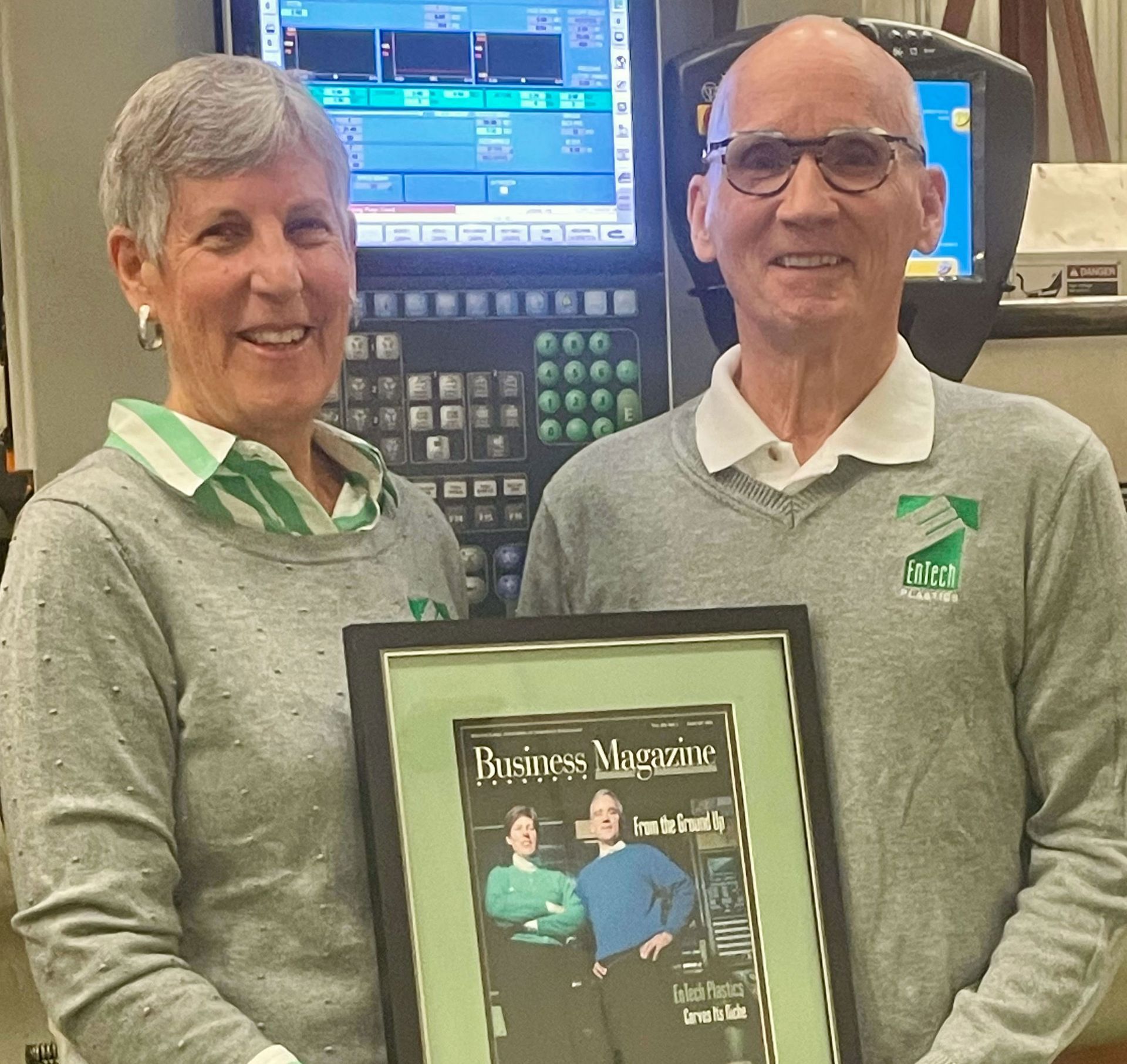
Although EnTech Plastics is celebrating its 30th anniversary this year, the seeds for the business were planted over 45 years ago. When Kevin Gearity was in high school, he spent summers working in a small costume jewelry manufacturing plant. There he discovered his fascination with manufacturing and all the challenges associated with running a manufacturing operation. Having decided on a career in manufacturing and seeing the potential offered by a degree in engineering, Kevn graduated from Stevens Institute of Technology in Hoboken, NJ, with a bachelor’s degree in mechanical engineering. He later followed that up at Carnegie Mellon with a Masters degree in Industrial Administration, majoring in Operations Management. After graduating, Kevin gained great experience working for Fortune 100 Companies including IBM and Johnson & Johnson. Though that experience was invaluable, Kevin felt something was missing. He realized that he could have a bigger impact by working at smaller companies so he decided to pursue opportunities at smaller manufacturing companies in the metalworking and plastics industries. After joining a plastics manufacturing company, Kevin furthered his engineering education by obtaining 33 credits in Plastics Engineering courses at Penn State University. While working for smaller, family-owned businesses, Kevin realized that he was the type of individual who had what it takes to run his own business. Despite the risk and with three young kids at home, Kevin founded EnTech Plastics and began operations with two injection molding machines in 1996.
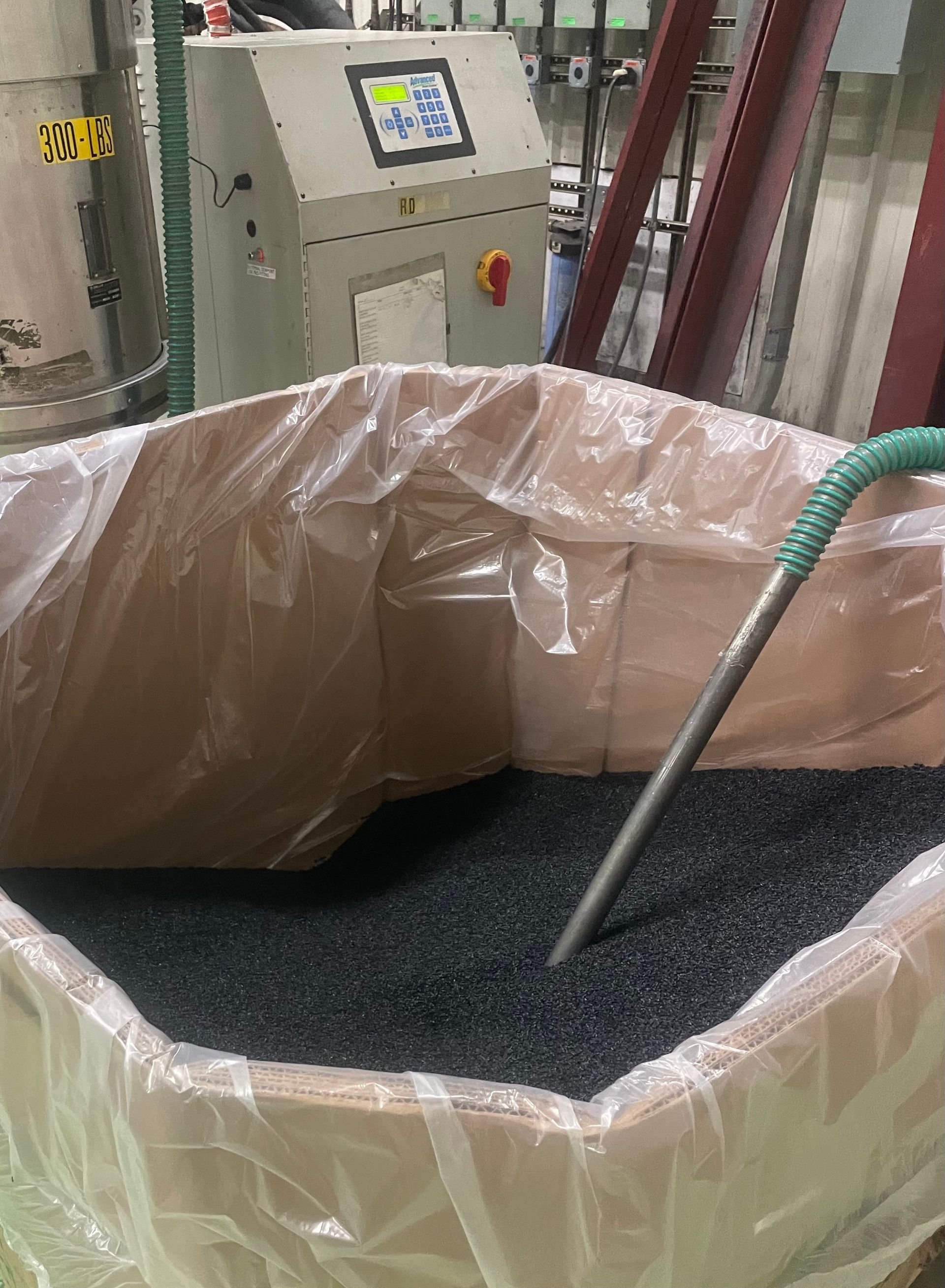
At EnTech Plastics, we treat wear resistance as an engineering problem and we consider tribology when specifying resins for custom injection molding.
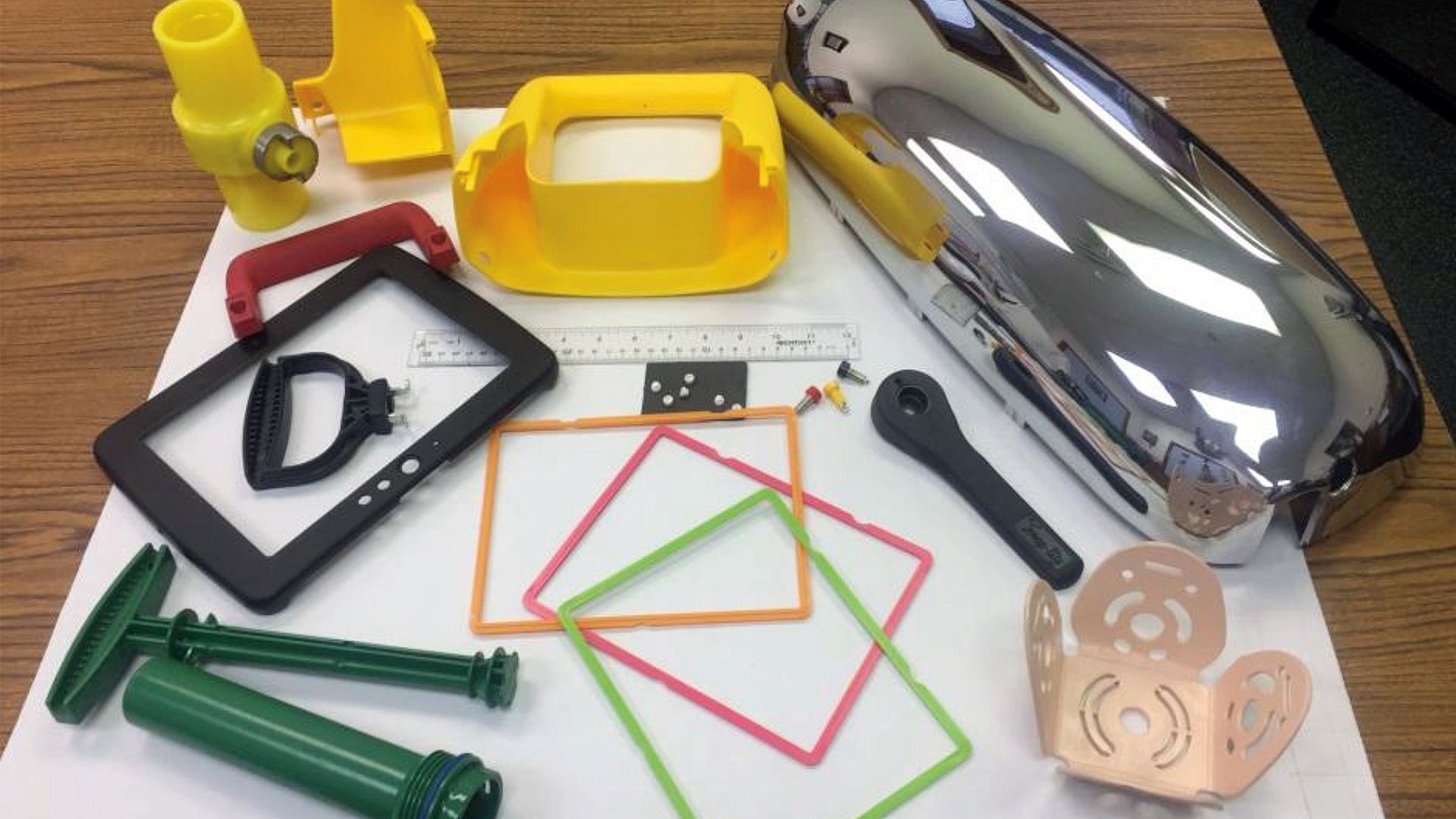
Performance is engineered. For engineers designing components subject to impacts, drops, vibration and rough handling, understanding the real mechanics of toughness makes all the difference. Resin selection plays a huge role, along with wall geometry and gate location. And it’s not just the materials. It’s the overall design and processing considerations that determine the outcome. Are toughness and strength the same thing when it comes to resin? Impact strength and tensile strength are not interchangeable. While one material might be stiff and strong in tension, it could also be fragile when it comes to impact. Toughness is the ability to absorb energy before fracturing. Even if a part has been vibrated for thousands of hours, this toughness is what keeps it in working condition. On a stress-strain curve, toughness is represented by the area under the curve. Resisting load is one thing, but the material needs to be able to deform plastically before it breaks. Engineers should specify tensile strength, as well as impact strength, notch sensitivity and the effect of temperature on ductile-to-brittle transition. What resin materials perform best in rugged applications? Toughened Nylons (Polyamide 6 and PA66 with Impact Modifiers) Standard nylon is a strong performer but low moisture absorption requirements and notch sensitivity are potential factors to consider. A toughened grade, compounded with elastomeric impact modifiers, often rubber or thermoplastic elastomers dispersed at the microscale, can improve impact resistance while maintaining chemical resistance. For what application would toughened nylon be the best fit? Under-hood and powertrain-adjacent applications where heat and chemical exposure are constants Material handling components like gears, brackets, conveyor parts and wear pads Structural housings that need dimensional stability alongside impact resistance Moisture uptake affects both dimensional stability and mechanical properties. Parts designed in dry-as-molded conditions will behave differently after equilibrium moisture absorption. If the application will involve outdoor exposure in cold temperatures, cold storage conditions or refrigerated environments, verify impact data at operating temperatures, not just the ambient temperature. Note that most toughened nylons retain reasonable impact performance down to around -20°C. Polycarbonate and PC Blends Polycarbonate (PC) is one of the most impact-resistant unfilled engineering resins available. It’s often used in protective equipment and enclosures requiring transparency and high toughness. Unmodified PC is notch sensitive, so fuels and cleaning agents can cause a chemical attack, which leads to cracking. PC blended with acrylonitrile butadiene styrene (ABS) is a high-performance thermoplastic blend. The strength and heat resistance of a PC compliments the processability and ductility of ABS. Costs are also lower. For heavy-duty enclosures, power tool housings and rugged consumer-industrial products, this blend would be ideal. PC blended with Polybutylene Terephthalate (PBT) and PC blended with Acrylonitrile Styrene Acrylate (ASA) would be optimal for outdoor and operating conditions featuring highly corrosive substances that degrade materials like concrete, steel and polymers. ASA has superior UV and weather resistance. Impact values often remain high down to -40°C or below, making it work well for refrigeration, outdoor and cold environments. ABS and Impact-Modified ABS ABS is the go-to for industrial enclosures, housings and structural components. The rubber butadiene phase, dispersed as particles within the SAN matrix, absorbs energy during impact, providing toughness that far exceeds general-purpose styrene resins. Standard ABS is cost effective and offers rigidity, toughness and processability. Impact-modified ABS grades compound additional elastomeric content to shift the balance further toward toughness, at some cost to stiffness and heat deflection temperature. ABS has its constraints like poor UV stability, limited chemical resistance and a reduction in impact performance at lower temperatures that drops off more sharply than PC. ASA (Acrylonitrile Styrene Acrylate) ASA offers similar processing characteristics and toughness profile to ABS while delivering dramatically superior UV and weathering resistance. There is no need for paint or any secondary coating. For outdoor enclosures, agricultural equipment housings, utility infrastructure components and any application with extended sun exposure, ASA is a clear choice. The resin cost is higher and there are slightly lower peak impact values compared to high-impact ABS grades. But by factoring out the cost of UV-protective coatings and the field performance risk of unprotected ABS in outdoor service, ASA still comes out on top regarding total system cost. Why is notch sensitivity important in impact design? Notch sensitivity dictates a material's vulnerability to sudden, brittle fracture at stress concentrators like a sharp corner, a gate vestige, a tooling mark or a snap-fit feature. Design implications are significant: Avoid sharp internal corners Draft angles and ejector pin design matter Snap-fit features require more attention Use notched impact data relevant to your geometry for best results. Why is wall thickness important in impact design? Wall thickness directly dictates a part’s structural integrity, ability to absorb energy and resistance to deformation, warping or cracking. If it’s too thin, it deflects quickly and fractures. The ideal space for unfilled engineering resins in rugged applications tends to be in the 2.5–4.5mm range, with wall-to-rib transitions designed to avoid abrupt cross-section changes. Ribs should be 50–70% of nominal wall thickness to avoid sink while still adding structural contribution. Uniform wall thickness across a part should always be the goal. Why is the geometry of a part an active contributor to its impact performance? The geometry of a part is an active contributor to impact performance by dictating how kinetic energy is dissipated through deformation modes. Closed cross-sections are better than open ones to improve stiffness-to-weight and energy absorption Gussets and radii work well together Weld lines are weak points, locate them away from high-stress zones Deep texture, logos and sharp embossing features can all act as stress concentrators, understand the impact How should I factor in the UV exposure profile when choosing materials? UV radiation breaks polymer chains, leading to surface chalking, color shift, embrittlement and ultimately loss of mechanical performance. Review your UV exposure profile. Short-term or protected (shaded) outdoor exposure? UV-stabilized ABS/PC grades (with UV absorbers added to the compound) Extended outdoor exposure in full sun? ASA is the first recommendation for thermoplastics expected to survive 5-10+ years of uncoated outdoor service without significant mechanical degradation Optical clarity or peak impact performance? PC/ASA blends/UV-stabilized PC grades Pigmentation consideration? Carbon black is the most effective UV stabilizer Designing for impact resistance isn't a single material decision, it's the integration of resin selection, part geometry, tooling design and processing discipline into a system that performs reliably in the real world. At EnTech Plastics, our engineers engage at the Design for Manufacturing stage specifically to identify where impact performance is at risk and what changes in geometry, material specification or processing approach will resolve it. If you're developing a component for protective equipment, rugged enclosures, material handling and have questions, reach out to discuss your specific needs. Contact EnTech Plastics today.